How to get clients through a tourism website. A beautiful tourism website that never brings in bookings is an expensive brochure. Many tour operators, safari lodges and hotels in Uganda pay for a website, upload a few photos of gorillas and sunsets, and then wait. The enquiries never come, or they come from people who only want a free itinerary. The problem is rarely the destination. Uganda, Rwanda, Kenya and Tanzania sell themselves. The problem is that the website was built to look good, not to win clients.
This guide explains exactly how to get clients through a tourism website. It is written for tour companies, safari operators, hotels, lodges, transfer services and tourism training institutions that want their website to become their best salesperson. Every step comes from the work our team at Kenlink Technologies does every week for tourism businesses across East Africa, and you will see real examples from the client websites we have designed.
By the end, you will know how to attract the right travellers, keep them on your pages, earn their trust and turn a curious visitor into a confirmed booking. If you would rather have experts do it for you, our website designing services are built around exactly these principles.
Why Most Tourism Websites Fail to Get Clients
Most tourism websites fail for the same handful of reasons. They load slowly on mobile phones. They hide prices and itineraries behind vague phrases. They have no clear way to ask a question or request a quote. They copy the same text every other safari company uses. And Google cannot find them, so the right travellers never arrive in the first place.
A traveller planning a once-in-a-lifetime gorilla trek is about to spend thousands of dollars with a company they have never met, in a country they may never have visited. That traveller is cautious. They compare five, ten or twenty operators before they send a single enquiry. Your website has only a few seconds to prove you are real, professional and worth contacting.
That is why getting clients online is not about having a website. It is about having the right website: one that is found, trusted and easy to book from. The rest of this guide breaks that down into practical steps you can apply today.
What a Client-Winning Tourism Website Actually Does
Before we go into tactics, it helps to understand the journey a traveller takes. Almost every booking follows the same path:
- Discovery – the traveller searches Google for something like “5 day gorilla trekking safari Uganda” or “hotels near Bwindi”.
- Evaluation – they land on your site, read itineraries, look at photos, check reviews and compare prices.
- Trust – they look for signs you are licensed, experienced and reliable.
- Action – they send an enquiry, chat on WhatsApp or book directly.
- Conversion – your team replies quickly with a tailored quote and secures a deposit.
A client-winning tourism website supports every one of these stages. Weak SEO breaks discovery. Thin content breaks evaluation. Missing licences and reviews break trust. A confusing contact form breaks action. When you fix each stage, enquiries rise steadily, without paying commissions to third-party booking platforms on every trip.
Step 1: Start With a Professional, Mobile-First Design
First impressions decide whether a traveller stays or leaves. Most of your visitors will arrive on a phone, often on a slow connection, while commuting or relaxing in the evening. If your homepage takes ten seconds to load or the menu breaks on a small screen, they simply press the back button and choose a competitor.
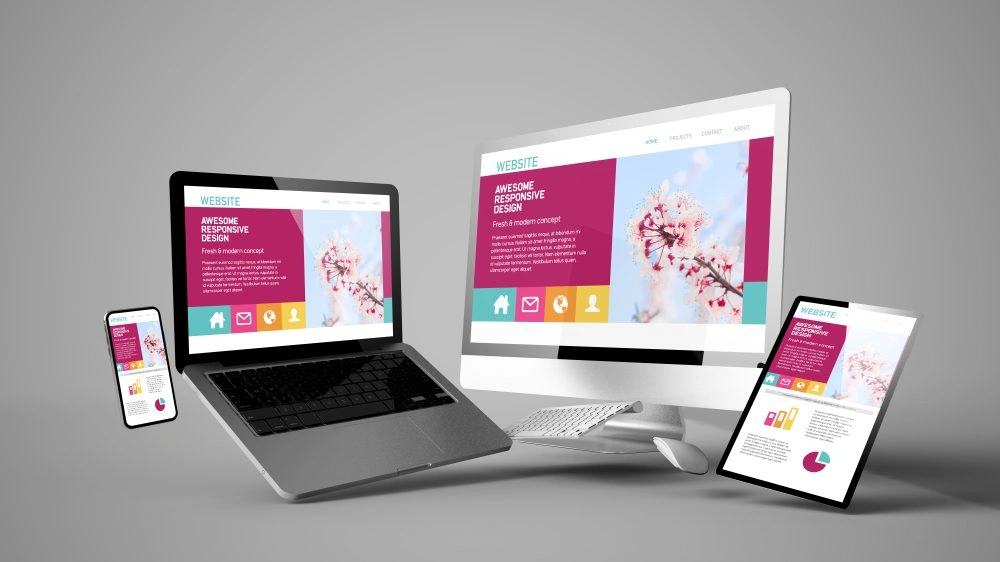
A mobile-first tourism website uses large, tappable buttons, readable fonts, compressed images and a simple menu. Your most important actions, such as Request a Quote, WhatsApp Us and View Safaris, should be visible without scrolling. Our team designs every tourism project on phones first and then scales up to desktops, which is one reason clients choose us among the best web designers in Kampala City.
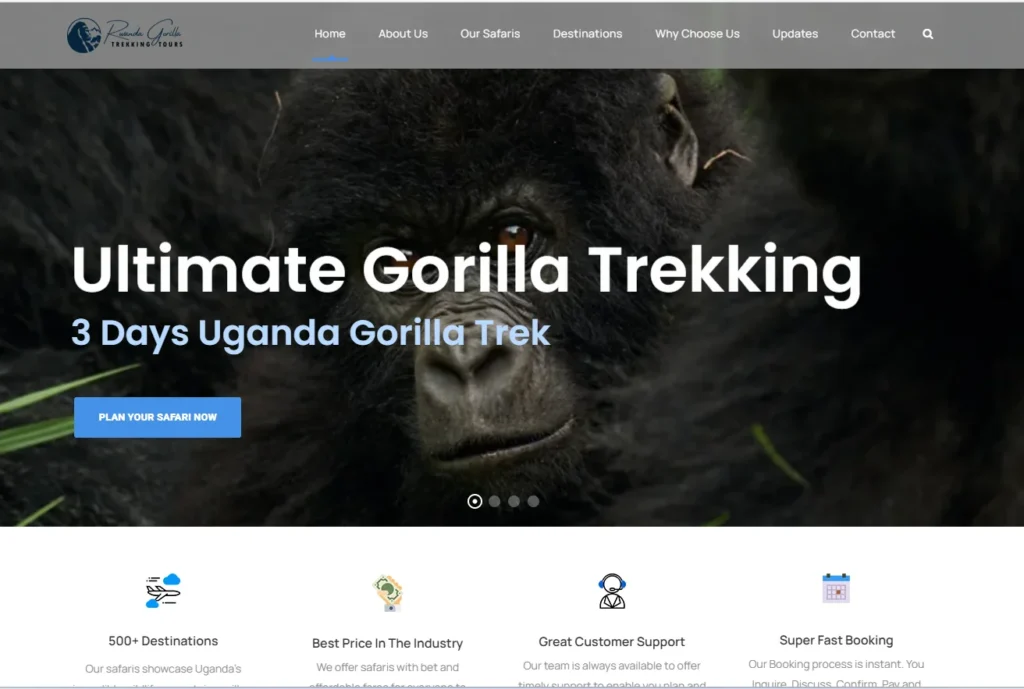
Design should also reflect the experience you sell. A luxury lodge needs calm, spacious layouts and rich photography. An adventure company needs energy, bold colours and action shots. A budget operator needs clear value messaging. Look at how Kaara Adventures leads with an emotive hero image and a direct Start Planning button, so visitors understand the offer and the next step in a single glance.
Step 2: Make Speed and Hosting a Priority
Page speed is both a ranking factor on Google and a conversion factor for humans. Heavy, uncompressed safari photos are the biggest culprit on tourism sites. Every image should be resized and saved in a modern format such as WebP before it is uploaded. Unused plugins should be removed, and caching should be switched on.
The server behind your website matters just as much. Cheap, overcrowded hosting slows your site at the exact moment international travellers are browsing. Reliable hosting with good uptime, SSL security and daily backups protects your bookings and your reputation. You can learn more in our guide to website hosting services in Uganda, or talk to us about web hosting and consultancy tailored to tourism traffic.
A fast site also helps with advertising. If you ever run Google or Facebook ads, a slow landing page wastes money because people click and then leave before the page loads. Speed is the foundation every other tactic in this guide is built on.
Step 3: Build Clear Itinerary and Package Pages
Travellers do not buy “Uganda”. They buy a specific experience: a three-day gorilla trek, a seven-day primate and wildlife safari, or a honeymoon in Queen Elizabeth National Park. Your website must present these experiences as clear, detailed packages that people can compare and imagine themselves taking.
Each package page should include a strong title with the duration and main highlight, a short overview, a day-by-day itinerary, accommodation options, what is included and excluded, a starting price or price range, and the best time to travel. Add a map, a photo gallery and a quote button at the top and bottom of the page.
Frena Adventures is a good example. Its menu groups dozens of trips by country and duration, from short gorilla treks to long combined adventures, so a visitor can find a matching trip in seconds. That structure also gives Google many focused pages to rank, each targeting a different search phrase.
If you are a hotel or lodge rather than a tour company, the same principle applies to rooms. Give each room type its own section with photos, size, bed configuration, amenities and rates. Our article on hotel website designing services in Uganda goes deeper into room pages and direct booking features.
Step 4: Use Tourism SEO to Get Found on Google
You cannot win clients who never see your website. Search engine optimisation is how a tourism business appears when travellers type their questions into Google. Done well, it brings a steady flow of free, high-intent visitors month after month.
Tourism SEO starts with keyword research. Find the exact phrases your ideal travellers use, such as “3 days gorilla trekking Uganda”, “Murchison Falls safari cost” or “Kampala airport transfer”. Assign one main keyword to each page and use it naturally in the page title, the first paragraph, at least one subheading, the image alt text and the URL.
Technical SEO matters too. Your site needs a clean URL structure, an XML sitemap submitted to Google Search Console, fast load times, secure HTTPS and no broken links. Schema markup for tours, hotels, reviews and FAQs can help your listings stand out with rich results. Local SEO is equally important: claim and complete your Google Business Profile with photos, opening hours and a link back to your website.
This is specialist work, and it is what our search engine optimization team does every day for tour operators and hotels. If you want the wider marketing picture, read our guide on how to generate tourism business with digital marketing.
Step 5: Publish Helpful Travel Content That Builds Authority
Package pages capture people who are ready to book. Blog articles and destination guides capture people who are still dreaming and planning, which is a much larger audience. When you answer their questions early, you become the company they trust when it is time to book.
Write about the topics travellers actually search for: the best time to visit Bwindi, what to pack for gorilla trekking, how much a safari costs, visa requirements, Uganda versus Rwanda gorilla trekking, family-friendly safaris and honeymoon ideas. Each article should link to the relevant package pages so readers can move straight from learning to booking.
Iconic Africa Safaris does this well with a detailed FAQ that covers permits, packing, safety, payment methods, age limits and visas. A section like that answers objections before a traveller even asks, and it gives Google rich, relevant text to rank. Destination pages, such as their Uganda gorilla safaris collection, act as hubs that link related tours together.
Great content takes time to write, which is why many operators outsource it. Our content creation service produces SEO-friendly blogs, destination guides and package descriptions written in a natural voice that converts. You can also browse our own Insights blog for examples of long-form content built to rank.
Step 6: Earn Trust With Proof, Reviews and Credentials
Trust is the biggest barrier between a visitor and a booking. International travellers worry about scams, poor service and safety. Your website must remove those fears with visible proof.
Display your tourism licence, memberships of bodies such as the Uganda Tourism Board and the Association of Uganda Tour Operators, and partnerships with the Uganda Wildlife Authority where they apply. Embed live reviews from TripAdvisor, Google or SafariBookings rather than typing testimonials yourself. Real names, dates and star ratings carry far more weight.
Add an About Us page with real photos of your team, guides and vehicles. Publish clear booking terms, a cancellation policy and a privacy policy. Show a physical office address and working phone numbers. Every one of these small signals tells a cautious traveller that you are a genuine business they can safely pay. Our own About Us page follows the same approach for our web design clients.
Step 7: Make It Effortless to Enquire and Book
Once a traveller is interested, every extra step loses you clients. Remove friction wherever you can. Put a quote button on every package page, near the top and again at the bottom. Keep forms short: name, email, travel dates, number of travellers, interests and a message box are usually enough.
Add a floating WhatsApp button. Many travellers, especially from Europe and Africa, prefer a quick chat to a long email. A trip planner form, like the one on Kaara Adventures, lets visitors describe their dream trip and gives your sales team everything they need to send a strong first quote. Frena Adventures uses a similar Plan Your Trip page that turns casual browsers into qualified leads.
For hotels and lodges, a direct booking engine with real-time availability is the strongest option. Platforms such as Uganda Hotel Hub show how searchable listings, nightly rates and clear amenities help travellers compare and choose quickly. Finally, reply fast. An enquiry answered within an hour is far more likely to convert than one answered tomorrow.
Step 8: Keep the Website Updated and Measure Results
A tourism website is never finished. Prices change, permits change, new lodges open and seasons shift. Outdated rates or broken booking forms quietly lose clients every day. Schedule regular updates to itineraries, prices, photos and blog posts, and keep your plugins and security patches current.
Install Google Analytics and Google Search Console to see where visitors come from, which pages they read and where they drop off. Track enquiries as goals so you know which pages actually bring clients. If you lack time for this, our website maintenance plans cover updates, backups, security monitoring and performance checks so your site keeps selling while you focus on running tours.
Step 9: Use Social Proof, Video and Social Media to Drive Traffic
Your website should sit at the centre of all your marketing. Every Instagram post, TikTok clip, Facebook update and YouTube video should point people back to a specific page on your site where they can learn more and enquire. Social media builds attention; your website turns that attention into clients.
Short videos of gorilla encounters, boat cruises on the Kazinga Channel or sunrise game drives are powerful. Embed them on relevant package pages so visitors feel the experience. Add social links in your header and footer, and make it easy to share your itineraries. When happy guests tag you in their photos, ask permission to feature them in a gallery on your website. Real guest content is more persuasive than any stock image.
Email is another underused channel. Offer a free downloadable guide, such as a gorilla trekking packing list, in exchange for an email address. Then send helpful follow-up emails with seasonal offers and new itineraries. Many travellers plan months ahead, and a gentle email at the right time can bring them back to book.
Real Examples From Kenlink Tourism Clients
Theory is useful, but nothing beats seeing these principles at work. Here are some of the tourism and hospitality businesses whose websites we have designed and supported. You can see more in our portfolio.
Kaara Adventures – Kaara Adventures organises its site by country, experience, national park and safari length. Each package has its own page with a clear call to action, and live TripAdvisor reviews sit on the homepage to build instant trust.
Frena Adventures – Frena’s site groups dozens of itineraries into country and combined holiday menus, with destination guides for every major park. This deep structure gives Google many pages to rank and gives travellers endless reasons to stay and explore.
Iconic Africa Safaris – Iconic’s homepage explains its booking process in three simple steps and backs it up with a long, genuinely helpful FAQ. Travellers get answers to almost every question before they even pick up the phone.
Uganda Hotel Hub – A booking and listing platform for hotels and safari lodges across Uganda, organised by destination, with nightly rates and amenities displayed clearly so travellers can compare stays near Bwindi, Queen Elizabeth or Kampala.
Pick and Transfer – Transport is a key part of every trip. Pick and Transfer shows how airport transfer and transport businesses can win tourism clients with a focused website that makes booking a ride simple.
Uganda Tourism Training Institute – The Uganda Tourism Training Institute proves that tourism websites are not only for tour operators. Training institutions use the same tactics, clear course pages, trust signals and easy enquiries, to attract students into the industry.
The Same Formula Works Beyond Tourism
The principles in this guide are not unique to safaris. Speed, clear service pages, SEO, trust signals and easy enquiries win clients in every sector. We have applied the same formula for education at Kenlink Institute, construction equipment hire at Heavy Machinery Uganda, and outdoor design at Green Legacy Landscaping. If you are planning a website for a school, we have also written about website designing for schools in Uganda.
For lodges in particular, location and experience-led design matter even more. Our guide on website design for safari lodges in Uganda shows how to sell the setting, the views and the activities around your property, not just the rooms.
Common Mistakes That Cost Tourism Businesses Clients
Even well-designed sites lose bookings through small, avoidable errors. Watch out for these:
- Copied content. Duplicating itinerary text from other operators hurts your Google rankings and makes you look like everyone else.
- No prices at all. Travellers want a starting point. A “from” price filters out time-wasters and attracts serious buyers.
- Stock photos only. Generic images make it hard to believe you run real trips. Use your own vehicles, guides and guests.
- Hidden contact details. If a visitor has to hunt for your phone number or WhatsApp, many will give up.
- Ignoring enquiries. Slow replies send clients straight to faster competitors.
- Never updating. Old permit prices, expired offers and broken links damage credibility.
Your Quick Checklist for Getting Clients Through a Tourism Website
Use this checklist to review your current website or brief your designer:
- Mobile-first design that loads in under three seconds
- Secure HTTPS, reliable hosting and daily backups
- Detailed package or room pages with itineraries, inclusions and starting prices
- One focus keyword per page, optimised titles and meta descriptions
- Google Business Profile and Search Console set up
- Regular blog posts and destination guides that link to packages
- Licences, memberships and live reviews displayed
- Short enquiry forms, a trip planner and a WhatsApp button
- Analytics tracking enquiries as goals
- A monthly maintenance and content update routine
Frequently Asked Questions
How long does it take for a tourism website to start getting clients? A well-built site can receive enquiries from social media and ads within days of launch. Organic Google traffic usually builds over three to six months as your pages gain authority and content grows.
Do I still need a website if I list my tours on booking platforms? Yes. Third-party platforms charge commission and control the customer relationship. Your own website lets you take direct bookings, keep more profit and build a brand that repeat and referred guests can find.
How many pages should a tourism website have? There is no fixed number, but more focused pages usually mean more ways to be found. At minimum, have a homepage, an about page, separate pages for each main package or room type, destination guides, a blog and a contact page.
How much does a tourism website cost in Uganda? Cost depends on the number of pages, booking features, content and SEO required. The best way to get an accurate figure is to share your goals with a designer. You can request a quote from Kenlink Technologies and we will recommend a package that fits your budget.
Can Kenlink redesign my existing tourism website? Yes. We regularly audit and rebuild existing tourism sites, keeping what works, fixing speed and SEO problems, and adding the conversion features covered in this guide.
Conclusion: Turn Your Tourism Website Into Your Best Salesperson
Getting clients through a tourism website is not luck. It is the result of a fast, mobile-first design, clear package pages, solid SEO, helpful content, visible trust signals, effortless enquiry options and consistent updates. When each of these pieces works together, your website stops being a digital brochure and starts bringing in bookings around the clock, from travellers across the world.
At Kenlink Technologies, we have over a decade of experience building websites that help tour operators, lodges, hotels and travel brands grow. That is why we are often listed among the best IT companies around Kampala. Explore all our services, read more growth tips in our digital marketing articles, or visit our office at Plot 149 Gayaza Road, Mulago, Kampala.
Ready to win more travellers? Call or WhatsApp +256 789 210 067, email info@kenlinktech.com, or contact us today for a free consultation on your tourism website.