
Hotel Website Designing Services in Uganda. Uganda’s hospitality industry is full of exceptional properties: elegant city hotels in Kampala, airport hotels in Entebbe, lakeside resorts on Lake Victoria, peaceful retreats on Lake Bunyonyi, adventure lodges in Jinja and remote safari camps on the edges of Bwindi, Queen Elizabeth and Murchison Falls. Yet many of these properties struggle with the same challenge: getting enough direct bookings.
The reason is simple. Today’s guests choose where to stay online. A business traveller in Nairobi, a family in Kampala planning a weekend getaway and a couple in Europe planning a gorilla safari all start by searching, comparing photos, reading reviews and checking prices. If your hotel website is slow, outdated, hard to use on a phone or impossible to book from, those guests go elsewhere, often to a competitor or to a booking platform that charges you commission.
This guide explains everything you need to know about hotel website designing services in Uganda. You will learn which features turn visitors into guests, how to design for different types of properties, how to rank on Google, what hotel websites cost and how to choose the right design partner. It is written by Kenlink Technologies, a Kampala-based web design company with more than 11 years of experience building websites for hospitality and tourism businesses across Uganda and East Africa.
Why Hotels in Uganda Need a Professional Website
A professional hotel website is your most valuable sales tool. It works around the clock, in every time zone, showcasing your rooms, facilities and location to guests who are ready to book.
Your website is also where guests decide whether to trust you. Before paying for accommodation, travellers want reassurance that your property is real, safe, clean and exactly as described. High-quality photos, clear information, genuine reviews and professional design all build that confidence. An outdated or broken website does the opposite, raising doubts and sending guests elsewhere.
Beyond bookings, your website supports every other marketing activity. Social media posts, Google listings, email campaigns, travel agent referrals and advertisements all lead guests back to your website for more details. If that destination disappoints, every other marketing effort loses value. Learn more about the role of websites in hospitality in our article on hotel and safari company websites.
The Hidden Cost of Relying Only on Booking Platforms
Online travel agencies and booking platforms help hotels reach travellers worldwide, and they remain a useful part of any distribution strategy. However, relying on them alone comes at a cost. Commissions on every booking reduce your profit, you have limited control over how your property is presented, and the guest relationship belongs largely to the platform rather than to you.
A well-designed hotel website lets you win more direct bookings. Direct guests mean lower distribution costs, direct communication before and after their stay, the chance to offer personalised packages and upgrades, and valuable guest data you can use for future marketing. Many hotels encourage direct bookings by offering small perks such as free airport transfers, breakfast, late check-out or the best available rate guaranteed on their own website.
The goal is balance: use platforms for visibility, and use your own website to convert as many guests as possible directly. Our guide on how hotels can increase bookings through online marketing explains how to build that balance.
What Hotel Website Designing Services Include
Professional hotel website designing services go far beyond choosing colours and fonts. A complete service typically includes:
- Strategy and planning: understanding your property, target guests, competitors and business goals.
- Custom design: a layout that reflects your brand, atmosphere and level of luxury.
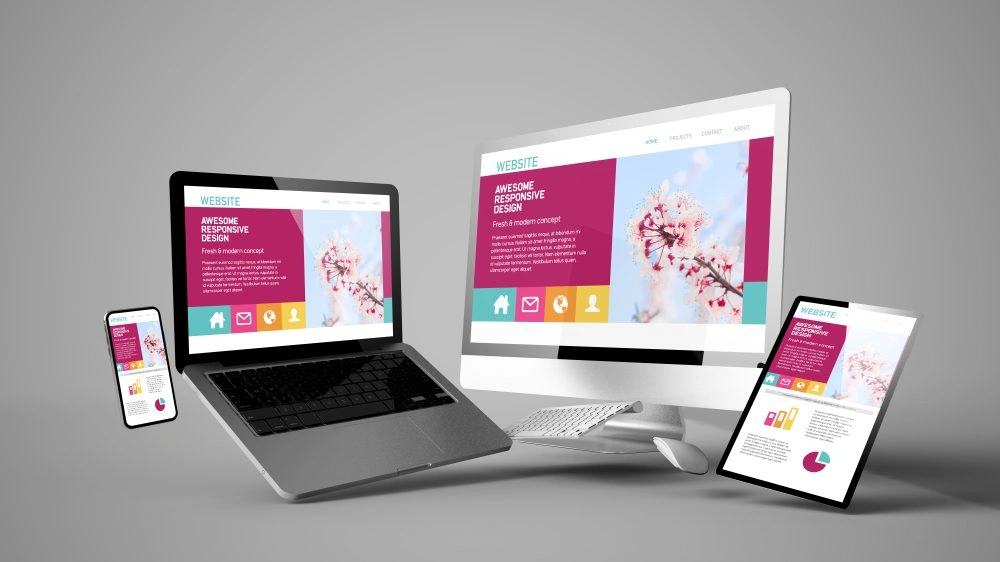
- Responsive development: a website that works perfectly on phones, tablets and computers.
- Booking integration: connecting an online booking engine or reservation enquiry system.
- Content creation: persuasive descriptions of rooms, dining, facilities and experiences.
- Search engine optimisation: making sure your property appears when guests search on Google.
- Hosting, security and maintenance: keeping your site fast, safe and up to date.
- Training: showing your team how to update rates, offers, photos and news.
At Kenlink, we provide all of these under one roof through our website designing, search engine optimization, content creation and web hosting and consultancy services.
Must-Have Features of a High-Converting Hotel Website
The best hotel websites in Uganda share a set of features designed to inspire guests and make booking effortless.
Stunning Photography and Virtual Tours
Guests book with their eyes. Professional, well-lit photos of every room type, bathrooms, views, pool, restaurant, gardens and common areas are essential. Show real guests enjoying your property, not just empty rooms. Video walkthroughs, drone footage and 360-degree virtual tours help guests imagine themselves staying with you. Images should be compressed carefully so they stay sharp without slowing the website down.
Detailed Room and Suite Pages
Each room type deserves its own page with a gallery, size, bed configuration, maximum occupancy, view, amenities such as Wi-Fi, air conditioning, minibar and workspace, and a clear button to check availability or book. Guests should never have to email you just to find out what a room includes.
Online Booking Engine
An integrated booking engine lets guests check availability, choose dates and rooms, see prices and confirm reservations instantly, without waiting for email replies. It should be simple, mobile-friendly and secure, with automatic confirmation emails. For smaller properties, a well-designed reservation request form or a WhatsApp booking flow can be a good starting point. Read about the benefits of online booking systems, which apply equally to hotels and lodges.
Clear Rates, Packages and Special Offers
Transparency builds trust. Display “from” prices or seasonal rates, and create dedicated pages for packages such as honeymoon stays, weekend getaways, conference packages, long-stay discounts and safari combinations. Highlight the benefits of booking directly on your website.
Location, Maps and Directions
Location is often a deciding factor, especially for business travellers and safari guests. Include an embedded Google Map, clear directions from Entebbe International Airport and Kampala city centre, travel times to nearby attractions and information on airport transfers and parking.
Dining, Conferences, Events and Weddings
Many Ugandan hotels earn significant revenue from restaurants, bars, conferences, workshops, weddings and parties. Give each its own page with menus, photos, capacities, floor plans and an enquiry form. Corporate clients and event planners in particular appreciate detailed information they can share with colleagues. Our article on the best website design services for restaurants in Kampala offers useful ideas for hotel dining pages.
Guest Reviews and Trust Signals
Display genuine reviews from Google, TripAdvisor and booking platforms, along with awards, certifications and memberships. Reviews placed near booking buttons reassure guests at the moment of decision.
WhatsApp, Phone and Live Contact Options
Many guests, especially in East Africa, prefer to chat before booking. A visible click-to-chat WhatsApp button, clickable phone numbers and a simple contact form make it easy for guests to ask questions and reserve quickly. Learn how WhatsApp marketing is changing businesses in Uganda.
Multi-Language and Multi-Currency Support
International guests appreciate seeing prices in US dollars or euros, and key pages in languages such as French or German can widen your reach. Domestic guests prefer prices in Uganda shillings. Flexible display options improve the experience for everyone.
Mobile-First, Fast-Loading Design
Most guests browse on smartphones, often on mobile data while travelling. Your website must load quickly, display perfectly on small screens and make booking simple with large, easy-to-tap buttons. Read our guide to responsive website design for Ugandan businesses.
Designing for Different Types of Hospitality Properties
Every property is unique, and the best hotel website designers tailor their approach to the type of guest each one serves.
City and Business Hotels in Kampala and Entebbe
Business travellers value convenience and efficiency. Their decisions depend on location, Wi-Fi quality, workspaces, meeting rooms, airport transfers and quick booking. Websites for city hotels should highlight conference facilities, corporate rates, proximity to business districts and the airport, and an easy booking process that works well on a phone between meetings.
Safari Lodges and Camps
Safari guests are buying an experience as much as a room. Websites for lodges near Bwindi, Queen Elizabeth, Kibale, Murchison Falls and Kidepo should tell a story through immersive photography, describe nearby activities such as gorilla trekking and game drives, explain how to get there and include practical information on meals, packing and park activities. Partnerships with tour operators should also be easy to set up through clear trade and agent enquiry options.
Tour operators’ websites show how much travellers value this kind of destination information. Our client Kenlink Tours, for example, publishes rich destination guides such as its page on Bwindi Impenetrable Forest National Park and a helpful About Uganda guide, the kind of content lodge websites can learn from.
Resorts and Lakeside Properties
Resorts on Lake Victoria, Lake Bunyonyi and along the Nile in Jinja sell relaxation, leisure and adventure. Their websites should emphasise views, pools, water activities, spa treatments, family facilities, weekend packages and events such as weddings and celebrations.
Guesthouses, B&Bs and Serviced Apartments
Smaller properties compete on value, character and personal service. Their websites should feel warm and welcoming, highlight what makes the property special, show clear prices and make it easy to contact the owner directly. Serviced apartments should emphasise long-stay benefits, kitchen facilities, security and location.
Boutique and Luxury Hotels
Boutique and luxury properties need websites that match their premium positioning: elegant typography, refined imagery, generous white space and storytelling about design, cuisine and personalised service. Every detail of the website should reflect the experience guests can expect on arrival.
Hotel Website SEO: Get Found by Guests on Google
A beautiful website only generates bookings if guests can find it. Search engine optimisation helps your hotel appear when travellers search phrases such as “hotels in Entebbe near the airport,” “lodge near Bwindi,” “conference hotel in Kampala” or “resort on Lake Victoria.”
Effective hotel SEO includes researching the exact phrases your guests use, creating dedicated pages for rooms, facilities, packages and local attractions, writing unique descriptions rather than copying text from booking platforms, optimising page titles, headings and image descriptions, and building a fast, secure and mobile-friendly website.
Location-focused content is especially powerful. Articles such as “Things to do near our hotel,” “How to get from Entebbe Airport to our lodge” or “Best time to visit Queen Elizabeth National Park” attract travellers during the planning stage and position your property as the obvious place to stay. Read our SEO tips for hotel and safari websites.
Google Business Profile and Maps Visibility
Many guests search for accommodation directly on Google Maps, especially when already travelling. A complete, verified Google Business Profile with accurate contact details, photos, amenities, opening information, a link to your website and a steady flow of genuine reviews can bring significant direct enquiries.
Make sure the name, address and phone number on your Google profile match your website exactly, respond to every review professionally and update photos regularly. Learn why your Google Business Profile matters for local SEO and how local SEO helps businesses in Kampala.
Speed, Hosting and Security for Hotel Websites
Hotel websites are image-heavy, receive international visitors and handle sensitive guest information, so they need strong technical foundations.
Fast hosting and careful image optimisation keep pages loading quickly, which improves both guest experience and search rankings. Read why your business website should load faster.
Security is equally important. An SSL certificate protects booking forms and personal information, while regular updates, backups and malware protection keep your site safe from hackers. A hacked hotel website can lose bookings, display warnings to visitors and damage hard-earned trust. Learn how an SSL certificate protects your website, and protect your investment with ongoing website maintenance.
Content That Sells Your Property
Words matter as much as pictures. Great hotel website content describes rooms and facilities in vivid, accurate language, highlights what makes your property unique and answers the questions guests commonly ask. It should speak to the specific guests you want to attract, whether busy executives, honeymooners, families or adventure travellers.
Avoid generic phrases such as “comfortable rooms and excellent service” that every hotel uses. Instead, be specific: the sunrise view over the lake from your balcony suites, the chef’s signature tilapia dish, the guided nature walk from your doorstep or the five-minute drive to Entebbe Airport. Specific details are more persuasive and help your pages rank for distinctive searches.
A blog or news section featuring local attractions, events, travel tips and guest stories keeps your website fresh and attracts search traffic over time. Our content creation service writes engaging hotel content that sells.
Connecting Your Website to Your Wider Marketing
Your hotel website should be the hub that connects all your marketing channels. Link it to active Instagram and Facebook pages where you share beautiful images and guest experiences, use video to showcase rooms and surroundings, and collect guest emails to share offers and encourage repeat stays.
Our guides on Instagram marketing, video marketing and email marketing strategies that increase sales explain how to make each channel work for hospitality businesses.
Building a Strong Hotel Brand Online
Your website is the clearest expression of your brand. From your logo, colours and typography to your photography style and tone of voice, every element should communicate the experience guests will receive. A rustic eco-lodge should feel natural and authentic, while a luxury city hotel should feel polished and sophisticated.
Consistency across your website, social media, signage, brochures and email builds recognition and trust. Read about the importance of branding in digital marketing.
Plan Your Website Around Uganda’s Travel Seasons
Hotel demand in Uganda rises and falls with the seasons. The drier months, broadly June to September and December to February, bring peak safari and gorilla trekking traffic, while public holidays, school breaks and the festive season drive domestic weekend getaways. Conferences and corporate events follow their own calendar, often busiest at certain points of the financial year.
A well-designed hotel website makes it easy to respond to these patterns. Your team should be able to update seasonal rates, publish limited-time offers, feature holiday packages on the homepage and promote green-season discounts without waiting for a developer. During quieter months, targeted offers for domestic travellers, expatriates and regional visitors can help maintain occupancy.
Planning content around the seasons also strengthens SEO. Publishing articles about Christmas getaways, Easter breaks, Martyrs’ Day travel or the best time for gorilla trekking a few weeks ahead of demand helps your pages rank when guests begin searching. To reach guests from abroad effectively, read how businesses can reach international customers online.
Accessible, Guest-Friendly User Experience
Great hotel websites are easy for everyone to use. Guests range from tech-savvy young travellers to older visitors and people with visual or mobility needs. Readable font sizes, strong colour contrast, descriptive image text, logical navigation and buttons that clearly state their purpose make your website more welcoming and more effective.
Accessibility also extends to information about your property. If you offer ground-floor rooms, ramps, accessible bathrooms or lifts, say so clearly. Guests who need these facilities often struggle to find reliable information, and properties that provide it win their loyalty.
Reduce friction wherever possible. Keep booking steps short, avoid unnecessary form fields, show the total price clearly before payment and confirm reservations instantly. Every simplification increases the number of visitors who complete their booking.
Measure Your Hotel Website’s Performance
A hotel website should be measured by results, not just appearance. Install Google Analytics and Google Search Console, and track the actions that matter most: booking engine starts and completions, reservation enquiries, WhatsApp clicks, phone calls and event enquiries.
Review the data regularly. Which countries send the most visitors? Which room pages attract the most interest? Where do visitors leave the booking process? Which marketing channels bring guests who actually book? These insights reveal what to improve, from rewriting a weak room description to simplifying a booking step or investing more in a high-performing channel.
Reviews and reputation are part of performance too. Monitor what guests say online and respond promptly and professionally. Learn more in our article on why online reputation management matters.
Hospitality and Tourism Websites Designed by Our Team
At Kenlink Technologies, hospitality and tourism are among our strongest specialities. Our work includes the website for Menlyn Hotel Residence, a boutique hotel in Kasese Town close to Queen Elizabeth and Rwenzori Mountains National Parks. The site presents each room type, from deluxe rooms to family suites, with clear pricing and booking options, so safari and business guests can understand the property and reserve with confidence.
We also design for the tourism businesses that send guests to hotels and lodges every day. We built the website for Kaara Adventures, including their detailed Uganda gorilla trekking page, and have worked with Iconic Africa Safaris, Pick and Transfer Safaris and Pick and Transfer, a travel and car rental company. Hospitality excellence also depends on skilled people, which is why we were proud to design the website for the Uganda Tourism Institute, whose course listings page helps future hospitality professionals choose their programmes.
Explore more of our work on the Kenlink Technologies portfolio.
Our Hotel Website Design Process
Every hotel website we build follows a clear, collaborative process:
- Discovery. We learn about your property, target guests, competitors, booking process and goals, then provide a clear written quote.
- Planning and content. We map out pages, gather photos and descriptions, and plan booking and enquiry flows.
- Design and development. We design a responsive website that reflects your brand and build every page with speed and SEO in mind.
- Booking integration. We connect your booking engine, reservation forms, WhatsApp and payment options.
- Testing. We test speed, mobile display, forms, booking flows and security across devices.
- Launch and training. We go live, submit the site to Google and train your team to update rates, offers and photos.
- Ongoing support. We provide hosting, maintenance and optional SEO to keep your website performing.
How Much Does a Hotel Website Cost in Uganda?
The cost of a hotel website depends on the size of your property, the number of pages, design complexity, booking functionality and the level of ongoing support. As a general guide, a simple guesthouse or small lodge website with an enquiry form costs less than a large hotel website with multiple room types, conference pages, an integrated booking engine and multi-language support.
Key cost factors include custom versus template-based design, the number of room, dining and event pages, booking engine integration and any third-party subscription, professional photography and video, content writing, multi-language features, and hosting, maintenance and SEO after launch.
Think of your website as an investment rather than an expense. A website that wins even a few extra direct bookings each month, without platform commissions, can quickly pay for itself. For typical market prices, see our guide on how much a website costs in Uganda, and contact us for a tailored quote.
How to Choose the Right Hotel Website Designer in Uganda
Use this checklist when comparing hotel website designers:
- Hospitality and tourism experience: do they understand how guests research and book?
- A live portfolio: can you visit real hotel and tourism websites they have built?
- Booking expertise: can they integrate a booking engine, payments and WhatsApp?
- SEO knowledge: will your website be built to rank on Google from day one?
- Mobile performance: do their websites load quickly and work well on phones?
- Ownership: will your domain and website be registered in your name with full access?
- After-launch support: do they offer hosting, maintenance and quick help when needed?
- Clear pricing: is everything included stated in a written quote?
Working with a local team also brings practical benefits, from face-to-face meetings to support in your time zone. Read about the benefits of hiring a local web design company in Uganda.
Common Hotel Website Mistakes to Avoid
Many hotel websites in Uganda lose bookings because of avoidable mistakes:
- Low-quality, outdated or stock photos that do not show the real property.
- No online booking option or a confusing, multi-step enquiry process.
- Missing or outdated prices, which frustrate guests and create doubt.
- Slow loading speeds caused by uncompressed images and poor hosting.
- Poor mobile experience, with tiny buttons and hard-to-read text.
- Hidden contact details or no WhatsApp option.
- Copied descriptions from booking platforms, which hurt search rankings.
- No SSL certificate, triggering browser security warnings.
When Should You Redesign Your Hotel Website?
If your website looks outdated, loads slowly, does not work well on mobile phones, generates few direct bookings or is difficult for your team to update, it is time for a redesign. Renovations, new room categories, rebranding or new services such as a spa or conference centre are also good reasons to refresh your website.
A redesign does not have to mean losing the search rankings you have already built. With careful planning, we preserve valuable content and redirect old pages correctly so your visibility improves rather than drops. Learn more about our website redesign service for growing companies.
Frequently Asked Questions About Hotel Website Design in Uganda
How long does it take to design a hotel website?
A small hotel or lodge website can usually be completed within a few weeks once content and photos are ready. Larger hotels with booking engines, multiple languages and many pages take longer.
Can my hotel website accept online bookings and payments?
Yes. We can integrate a booking engine that shows real-time availability and accepts secure payments, or set up reservation request forms and WhatsApp booking for smaller properties.
Do I still need booking platforms if I have a website?
Booking platforms remain useful for visibility, but your own website lets you win direct bookings without commission and build relationships with guests. The best strategy uses both.
Will my hotel website appear on Google?
Every website we build includes SEO foundations such as fast loading, clean structure and optimised page titles. For competitive locations, an ongoing SEO plan delivers stronger results.
Can my staff update rates and photos themselves?
Yes. We build user-friendly websites and train your team to update rates, offers, photos and news without technical skills.
Can you build a website for a hotel that has not opened yet?
Absolutely. Launching your website before opening day is a smart move. A pre-opening website can showcase architectural renderings, room previews and your story, collect early enquiries and email sign-ups, and start building search visibility so guests can find you from day one. We then update it with real photography and full booking features as you approach opening.
Do you provide hosting and professional email for hotels?
Yes. We provide secure hosting, SSL certificates and professional email addresses such as reservations@yourhotel.co.ug, which look far more trustworthy to guests and corporate clients than free email accounts. Read why businesses need professional email hosting.
Get a Hotel Website That Brings Direct Bookings
Your hotel website should be your best salesperson: beautiful, persuasive, fast, easy to book and visible on Google. With professional hotel website designing services, you can showcase your property to guests around the world, reduce dependence on commission-based platforms and build lasting relationships with your guests.
Whether you run a boutique hotel in Kasese, a business hotel in Kampala, a lakeside resort in Entebbe or a safari lodge near Bwindi, the right website can transform how guests discover, trust and book your property. The sooner it is working for you, the sooner those direct bookings begin.
At Kenlink Technologies, we combine more than 11 years of web design experience with deep knowledge of Uganda’s hospitality and tourism industry. Learn more about our team, explore all our services, read more insights on our blog, and contact us for a free consultation and quote. Call or WhatsApp +256 789 210 067, email info@kenlinktech.com, or visit us at Plot 149, Gayaza Road, Mulago, Kampala. Let us design a website that fills your rooms.